
What is it suddenly about guests asking for recipes? Must be doing something right - lots of them keep asking atm, even when you're in the middle of serving 82 covers (not quite the right time).
125g ish of herbs, depending on what you have growing. The version I made a few weeks ago was heavy on the basil, also with spinach, rocket, parsley, tarragon and nettles which all add a bit of depth.
75g Nuts - I used a mix of half pinenuts, half cashews.
75g Grated parmesan
75ml Extra virgin olive oil
75ml Regular blended olive oil, or vegetable oil
1 - 2 Garlic cloves, depending on size and pungency.
Dairy free and nut free alternatives
0
 |
| Nettle and chorizo risotto with grilled scallops and nettle pesto |
If you're a purist you believe in only basil pesto. Go beyond the boundaries, however, and in Pestoland there are as many variations as you can dream up: beetroot, parsley, nettle, walnut, tarragon, pistachio, red pepper, sun dried tomato, kale, pumpkin seeds, courgette, even sweetcorn (apparently). Take a look at some here!
Pine nuts or Cashews?
If you look at the ingredients on a jar of shop brought pesto you'll often see cashews on there. Pine nuts are one of the most expensive nuts so they add cashews to lower the price. Adding cashews also gives you a smoother flavour. It really depends how you want it to taste.
You can use plenty of other nuts as well - pistachios (if you're feeling decadent), walnuts, brazil nuts, almonds etc.
Top tips to a good pesto?
- Extra virgin olive oil can be a little strong & pungent for pesto - if using extra virgin consider using 1/2 and 1/2 with vegetable oil or low grade olive oil to tone it down.
- Like a good stew, pesto seems to taste better the next day when all the flavours have developed.
- If you want to keep it for a few weeks in the fridge transfer to a jar. Add oil so the herb/ nut body of the pesto is covered - this prevents the air getting to it and it will keep.
- If you want to turn the pesto in a dressing simply add more oil.
125g ish of herbs, depending on what you have growing. The version I made a few weeks ago was heavy on the basil, also with spinach, rocket, parsley, tarragon and nettles which all add a bit of depth.
75g Nuts - I used a mix of half pinenuts, half cashews.
75g Grated parmesan
75ml Extra virgin olive oil
75ml Regular blended olive oil, or vegetable oil
1 - 2 Garlic cloves, depending on size and pungency.
- If you need to wash the herb leaves, make sure they are well dried on a clean dry cloth before using. Water mixing with the oil in the pesto makes it go white as it emulsifies, after it settles it splits - not good!
- Traditionally you would use a pestle and mortar. Now we have food processors and vitamixes and life is all good. You can choose how fine you want your pesto: a blunt charity shop food proccessor will make a coarse pesto, and slightly darker, as the more herbs are chopped and bruised the darker they go. The vitamix will whizz it into a fine bright green puree in seconds. The Kenwood mini chopper seems to go somewhere in the middle. It really depends on what you want to use your pesto for.
- Blend all the ingredients till your desired texture is achieved.
- Taste for seasoning.
 |
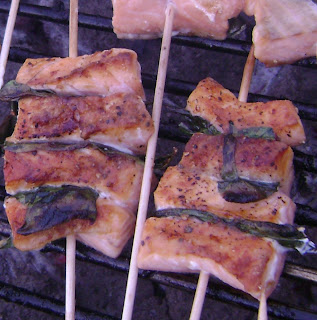
| Pesto baked salmon with orange and feta |
Yes - we have it all these days, including garlic free. Anything's possible!
Dairy free pesto - replace parmesan with a splash of lemon juice, or adding nutritional yeast. I've tried it with vegan 'cheese' and it's not nice (soy cheese tastes too weird). A few cannellini beans are another cheese replacement possibility.
Nut free pesto - replace nuts with brown rice, bulgar wheat, chickpeas, soy beans, sunflower or pumpkin seeds. Also check the oil you are using - blended oil can include nut oils!
Disclaimer
Links to the Vitamix and Kenwood above certainly weren't paid for - they're just great machines which make the kitchen a happier place......


 Batted out veal escalopes rolled in pancetta, with roasted peppers and red onion, mozzarella, parsley and basil.


 No picture of the chicken poached in plum and brandy wine and wrapped in parma ham - but you can see that from a
 Cucumber, yogurt and mint
 Salad of spinach, blacksticks blue, baby plum tomatoes, red onion and olives

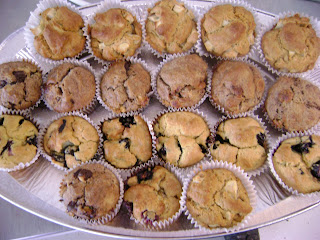 and the assiette of desserts I served at Upper Court:


